


5 Mistakes to Avoid in a Marketing Campaign
Introduction
A successful marketing campaign can increase brand awareness, generate quality leads, and boost revenue. However, even the most creative campaigns can fail if they are not planned and executed correctly. Many businesses invest significant time and money into marketing efforts but overlook critical factors that impact campaign performance.
Whether you’re a startup, small business, or established company, avoiding common marketing mistakes can help maximize your return on investment and achieve better results. Here are five major mistakes to avoid in your next marketing campaign.
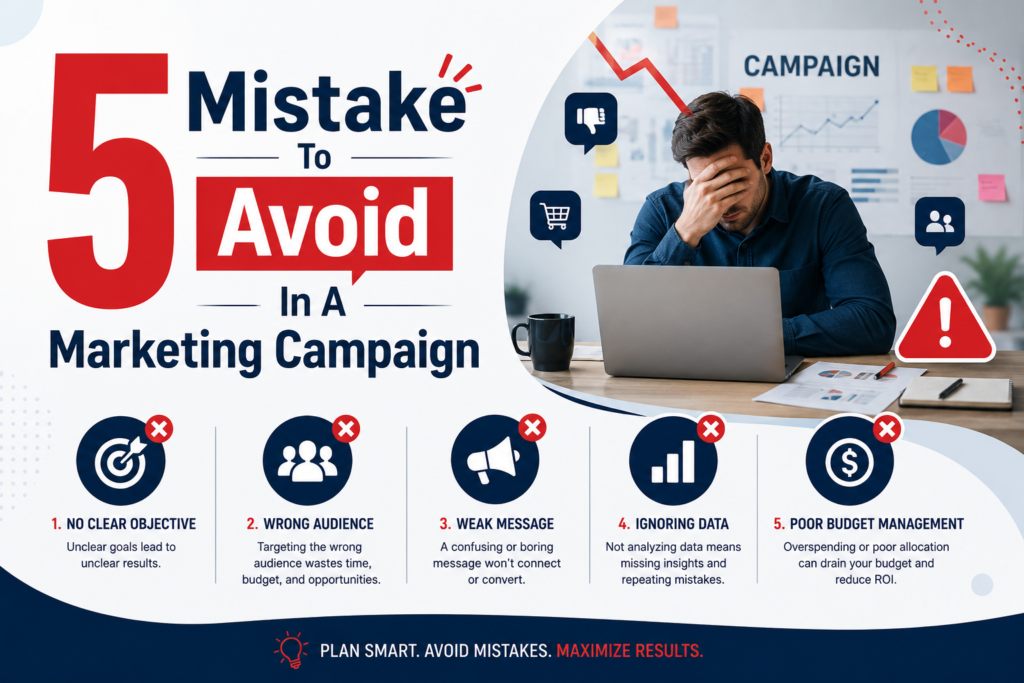
1. Not Defining Clear Goals
One of the biggest mistakes businesses make is launching a marketing campaign without clear objectives. If you don’t know what success looks like, it becomes difficult to measure performance and make improvements.
Before starting a campaign, identify specific goals such as:
- Increasing website traffic
- Generating qualified leads
- Boosting sales
- Growing social media engagement
- Improving brand awareness
Setting measurable goals helps your team stay focused and ensures that every marketing activity contributes to the desired outcome.
How to Avoid This Mistake
Use SMART goals—Specific, Measurable, Achievable, Relevant, and Time-bound—to create a clear roadmap for your campaign.
2. Ignoring Your Target Audience
A marketing message that appeals to everyone often connects with no one. Many campaigns fail because businesses focus more on what they want to say rather than what their audience wants to hear.
Understanding your target audience is essential for creating relevant and engaging content. Factors such as age, location, interests, buying behavior, and pain points should influence your marketing strategy.
How to Avoid This Mistake
Conduct market research, create customer personas, and analyze customer data to better understand your audience’s needs and preferences.
3. Using the Wrong Marketing Channels
Not every marketing platform delivers the same results for every business. Some companies spend heavily on channels where their audience is not active, leading to poor engagement and wasted budget.
For example:
- LinkedIn works well for B2B marketing.
- Instagram is ideal for visual brands.
- Email marketing is effective for customer retention.
- Google Ads can drive targeted traffic and conversions.
Choosing the right channel is just as important as creating the right message.
How to Avoid This Mistake
Identify where your audience spends most of their time and allocate your marketing budget accordingly. Focus on quality engagement rather than being present on every platform.
4. Neglecting Performance Tracking and Analytics
Many businesses launch campaigns and simply hope for positive results. Without tracking key performance indicators (KPIs), it is impossible to know what is working and what needs improvement.
Marketing analytics provide valuable insights into customer behavior, conversion rates, engagement levels, and return on investment.
How to Avoid This Mistake
Monitor important metrics such as:
- Website traffic
- Click-through rates
- Conversion rates
- Cost per lead
- Social media engagement
- Return on ad spend
Use tools like Google Analytics, social media insights, and CRM reporting systems to measure campaign effectiveness.
5. Focusing Only on Promotion and Not Value
Customers today are constantly exposed to advertisements. If your campaign focuses only on selling products or services, your audience may quickly lose interest.
Successful marketing campaigns provide value through education, entertainment, problem-solving, or useful information. Building trust often leads to stronger customer relationships and higher conversion rates.
How to Avoid This Mistake
Create content that addresses customer challenges, answers common questions, and offers practical solutions. When customers see value in your content, they are more likely to engage with your brand.
The Importance of Continuous Improvement
Even well-planned marketing campaigns require ongoing optimization. Consumer preferences, market conditions, and digital trends change frequently. Businesses that regularly analyze performance and adapt their strategies are more likely to achieve long-term success.
Testing different headlines, visuals, audience segments, and marketing channels can reveal opportunities to improve results and maximize campaign effectiveness.
Conclusion
Marketing campaigns can deliver exceptional results when backed by clear goals, audience insights, strategic channel selection, data analysis, and valuable content. Avoiding common mistakes helps businesses save time, reduce costs, and improve overall campaign performance.
By focusing on your audience, tracking results, and continuously refining your strategy, you can create marketing campaigns that generate meaningful engagement, strengthen your brand, and drive sustainable business growth.